


In the realm of modern manufacturing, 5 Axis Machining has emerged as a revolutionary technology, especially when it comes to producing heat sinks. As a dedicated 5 Axis Machining Heat Sink [provider], I've witnessed firsthand the profound impact of tool geometry on the entire process. This blog aims to delve into the intricate relationship between tool geometry and 5 Axis Machining of heat sinks, exploring how it influences efficiency, quality, and overall performance.
Understanding 5 Axis Machining Heat Sink
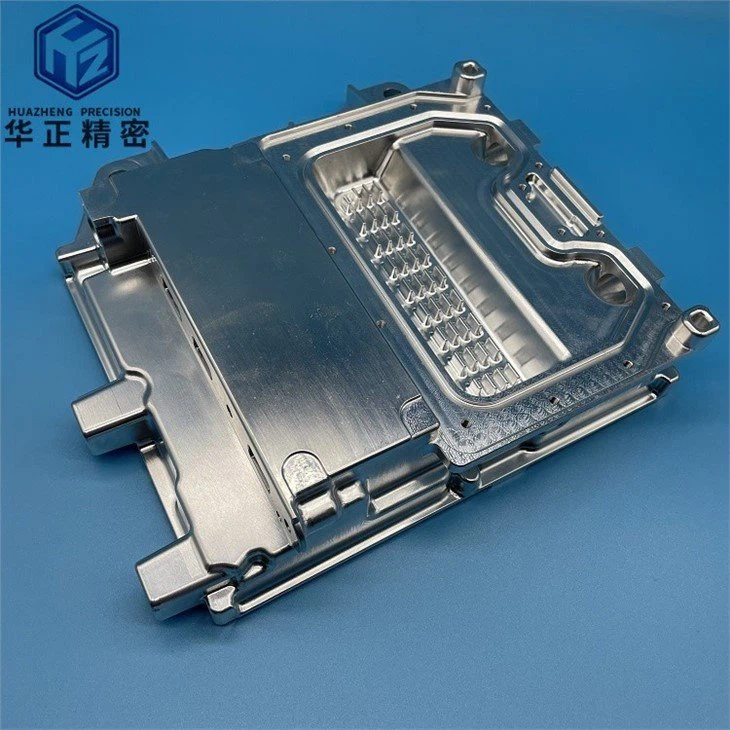
Before we dive into the role of tool geometry, let's briefly understand what 5 Axis Machining Heat Sink is. 5 Axis Machining Heat Sink refers to the process of using advanced 5 Axis CNC machines to fabricate heat sinks. Heat sinks are crucial components in various electronic devices, as they dissipate heat generated by electronic components, ensuring their stable operation. The 5 Axis Machining technology allows for more complex and precise machining operations, enabling the production of heat sinks with intricate shapes and high performance.
The Significance of Tool Geometry in 5 Axis Machining
Tool geometry plays a pivotal role in 5 Axis Machining of heat sinks. It encompasses various factors such as the shape, size, and cutting edge design of the cutting tools. These factors directly affect the cutting forces, chip formation, surface finish, and tool life. By optimizing the tool geometry, we can achieve higher machining efficiency, better quality, and lower production costs.
Cutting Forces and Power Consumption
The shape and size of the cutting tool have a significant impact on the cutting forces and power consumption during machining. A well-designed tool geometry can reduce the cutting forces, resulting in less power consumption and less wear on the machine and tool. For example, a tool with a proper rake angle can reduce the cutting forces by allowing the chips to flow more smoothly, while a tool with a suitable cutting edge radius can improve the cutting performance and reduce the cutting forces.
Chip Formation and Evacuation
Proper chip formation and evacuation are essential for efficient machining. The tool geometry affects the shape and size of the chips, as well as their evacuation from the cutting zone. A tool with a good chip breaker design can break the chips into smaller pieces, making them easier to evacuate. This helps to prevent chip clogging, which can lead to poor surface finish, tool wear, and even machine damage.
Surface Finish and Dimensional Accuracy
The tool geometry also has a direct impact on the surface finish and dimensional accuracy of the machined heat sinks. A sharp cutting edge and a smooth tool surface can produce a better surface finish, while a precise tool geometry can ensure the dimensional accuracy of the heat sink. For example, a ball nose end mill with a small radius can be used to machine complex curved surfaces with high precision and good surface finish.
Tool Life and Cost
Tool life is an important consideration in machining. A well-designed tool geometry can extend the tool life by reducing the wear and tear on the tool. This can lead to lower tool costs and less downtime for tool changes. For example, a tool with a hard coating can improve the tool's wear resistance, while a proper tool geometry can distribute the cutting forces evenly, reducing the stress on the tool.
Specific Tool Geometry Considerations for 5 Axis Machining Heat Sinks
When it comes to 5 Axis Machining of heat sinks, there are several specific tool geometry considerations that need to be taken into account.
Helix Angle
The helix angle of the cutting tool affects the chip evacuation and the cutting forces. A larger helix angle can improve the chip evacuation, but it may also increase the cutting forces. Therefore, the helix angle needs to be carefully selected based on the material being machined and the machining conditions.
Rake Angle
The rake angle of the cutting tool affects the cutting forces and the chip formation. A positive rake angle can reduce the cutting forces, but it may also reduce the tool's strength. A negative rake angle can increase the tool's strength, but it may also increase the cutting forces. Therefore, the rake angle needs to be optimized based on the material being machined and the machining requirements.
Cutting Edge Radius
The cutting edge radius of the cutting tool affects the surface finish and the cutting forces. A smaller cutting edge radius can produce a better surface finish, but it may also increase the cutting forces. Therefore, the cutting edge radius needs to be selected based on the surface finish requirements and the machining conditions.
Tool Nose Radius
The tool nose radius of the cutting tool affects the surface finish and the dimensional accuracy. A larger tool nose radius can produce a better surface finish, but it may also reduce the dimensional accuracy. Therefore, the tool nose radius needs to be carefully selected based on the surface finish and dimensional accuracy requirements.
Case Studies: Optimizing Tool Geometry for 5 Axis Machining Heat Sinks
To illustrate the importance of tool geometry in 5 Axis Machining of heat sinks, let's look at some case studies.
Case Study 1: Improving Surface Finish
In a recent project, we were tasked with machining a heat sink with a complex curved surface. The initial tool geometry used in the machining process resulted in a poor surface finish. By optimizing the tool geometry, specifically the cutting edge radius and the tool nose radius, we were able to significantly improve the surface finish of the heat sink. The new tool geometry allowed for a more precise and smooth cutting process, resulting in a surface finish that met the customer's requirements.
Case Study 2: Increasing Tool Life
In another project, we were machining a heat sink made of a hard alloy material. The initial tool geometry led to rapid tool wear, resulting in frequent tool changes and high production costs. By optimizing the tool geometry, including the rake angle and the coating, we were able to extend the tool life by more than 50%. This not only reduced the tool costs but also increased the machining efficiency by reducing the downtime for tool changes.
Conclusion
In conclusion, tool geometry plays a crucial role in 5 Axis Machining of heat sinks. By understanding the impact of tool geometry on cutting forces, chip formation, surface finish, tool life, and cost, we can optimize the tool geometry to achieve higher machining efficiency, better quality, and lower production costs. As a 5 Axis Machining Heat Sink [provider], we are committed to using the latest tool geometry technologies and techniques to provide our customers with high-quality heat sinks.
If you are in need of 5 Axis Machined Machinary Parts or High Quality 5 Axis CNC Service, please feel free to contact us for procurement and negotiation. We look forward to working with you to meet your machining needs.

References
- Smith, J. (2018). Advanced Machining Technology. Elsevier.
- Jones, A. (2019). Tool Geometry and Cutting Performance. Springer.
- Brown, C. (2020). 5 Axis Machining: Principles and Applications. Wiley.


