


As a seasoned supplier of 5 Axis Machining Heat Sink, I understand the critical role that the feed rate plays in the overall quality and efficiency of the machining process. In this blog post, I will share some insights on how to adjust the feed rate in 5 Axis Machining Heat Sink, drawing on my years of experience in the industry.
Understanding the Feed Rate in 5 Axis Machining
The feed rate in 5 Axis Machining refers to the speed at which the cutting tool moves along the workpiece during the machining process. It is a crucial parameter that directly affects the surface finish, tool life, and machining time. A proper feed rate can ensure high - quality machining results, while an incorrect one can lead to issues such as poor surface finish, excessive tool wear, and even damage to the workpiece.
In 5 Axis Machining Heat Sink, the feed rate needs to be carefully adjusted according to various factors. These include the material of the heat sink, the type of cutting tool, the complexity of the machining operation, and the desired surface finish.
Factors Affecting Feed Rate Adjustment
Material of the Heat Sink
Different materials have different properties, which significantly influence the feed rate. For example, aluminum is a commonly used material for heat sinks due to its good thermal conductivity and relatively low density. Aluminum is relatively soft, allowing for a higher feed rate compared to harder materials like stainless steel. When machining an aluminum heat sink, a higher feed rate can be employed to increase productivity without sacrificing too much on tool life.
On the other hand, if the heat sink is made of a hard - to - machine material such as titanium, the feed rate needs to be much lower. Titanium has high strength and poor thermal conductivity, which means that the cutting tool will generate more heat during machining. A lower feed rate helps to reduce the heat generation and prevent excessive tool wear.
Type of Cutting Tool
The type of cutting tool used also plays a vital role in feed rate adjustment. Carbide cutting tools are widely used in 5 Axis Machining Heat Sink due to their high hardness and wear resistance. They can generally tolerate higher feed rates compared to high - speed steel (HSS) tools.
For instance, a carbide end mill can be used at a higher feed rate when machining a heat sink because it can withstand the cutting forces and heat better than an HSS end mill. However, the geometry of the cutting tool, such as the number of flutes and the helix angle, also affects the feed rate. A cutting tool with more flutes can remove more material per revolution, allowing for a potentially higher feed rate.
Complexity of the Machining Operation
The complexity of the 5 Axis Machining operation for the heat sink is another important factor. If the heat sink has intricate features, such as fine fins or deep cavities, a lower feed rate may be required. This is because the cutting tool needs to move more precisely to achieve the desired shape and surface finish.
For example, when machining fine fins on a heat sink, a high feed rate may cause the fins to break or deform. In such cases, a slower feed rate ensures that the cutting tool can accurately remove the material and maintain the integrity of the fins.
Desired Surface Finish
The desired surface finish of the heat sink is directly related to the feed rate. A smoother surface finish generally requires a lower feed rate. When a high - quality surface finish is needed, the cutting tool needs to remove the material more gradually, resulting in less surface roughness.
Conversely, if a rough surface finish is acceptable, a higher feed rate can be used to increase the machining efficiency. However, it is important to note that even for a rough finish, the feed rate should not be set too high to avoid excessive tool wear and damage to the workpiece.
Steps to Adjust the Feed Rate
Step 1: Analyze the Machining Requirements
Before starting the machining process, thoroughly analyze the requirements of the heat sink. Determine the material, the type of cutting tool to be used, the complexity of the features, and the desired surface finish. This analysis will provide a basis for the initial feed rate setting.
Step 2: Refer to Tool Manufacturer's Recommendations
Tool manufacturers usually provide recommended feed rates for their cutting tools based on different materials and machining conditions. These recommendations are a good starting point for feed rate adjustment. For example, if you are using a specific carbide end mill, refer to the manufacturer's catalog to find the suggested feed rate range for the material of the heat sink.
Step 3: Conduct Test Cuts
Once you have set an initial feed rate based on the above steps, conduct test cuts on a sample workpiece. Observe the machining process closely, paying attention to the cutting forces, the chip formation, and the surface finish of the workpiece.
If the cutting forces are too high, the chips are too long and difficult to break, or the surface finish is poor, it may indicate that the feed rate is too high. In this case, reduce the feed rate and repeat the test cut. On the other hand, if the machining process seems too slow and the tool is not removing material efficiently, the feed rate may be too low, and you can increase it slightly.
Step 4: Fine - Tune the Feed Rate
Based on the results of the test cuts, fine - tune the feed rate. Make small adjustments and continue to monitor the machining process until you achieve the optimal balance between productivity, tool life, and surface finish.
Importance of Proper Feed Rate Adjustment
Improved Productivity
Proper feed rate adjustment can significantly improve the productivity of 5 Axis Machining Heat Sink. By setting the feed rate at an appropriate level, the cutting tool can remove material more efficiently, reducing the machining time. This allows for more heat sinks to be produced in a given period, increasing the overall output of the manufacturing process.
Extended Tool Life
A correct feed rate helps to extend the life of the cutting tool. When the feed rate is set too high, the cutting tool is subjected to excessive forces and heat, which can cause rapid wear and breakage. On the other hand, a feed rate that is too low may result in the cutting tool rubbing against the workpiece instead of cutting, also leading to premature wear. By adjusting the feed rate to the optimal level, the cutting tool can operate under more favorable conditions, prolonging its service life.
High - Quality Machining Results
Proper feed rate adjustment ensures high - quality machining results. It helps to achieve the desired surface finish and dimensional accuracy of the heat sink. A well - machined heat sink with a smooth surface finish and accurate dimensions is more likely to meet the performance requirements and customer expectations.
Our Company's Expertise in 5 Axis Machining Heat Sink
As a 5 Axis Machining Heat Sink supplier, we have extensive experience in adjusting the feed rate to achieve the best machining results. Our team of skilled engineers and technicians is well - versed in analyzing the various factors affecting feed rate adjustment and can make precise adjustments for different heat sink machining projects.
We offer a wide range of 5 Axis Precision Machined Components and High Precision 5 - Axis Spare Parts for heat sink applications. Our advanced machining facilities, including Advanced CNC 5 - axis Machining For Magnesium Alloys, allow us to handle complex machining operations with high precision.
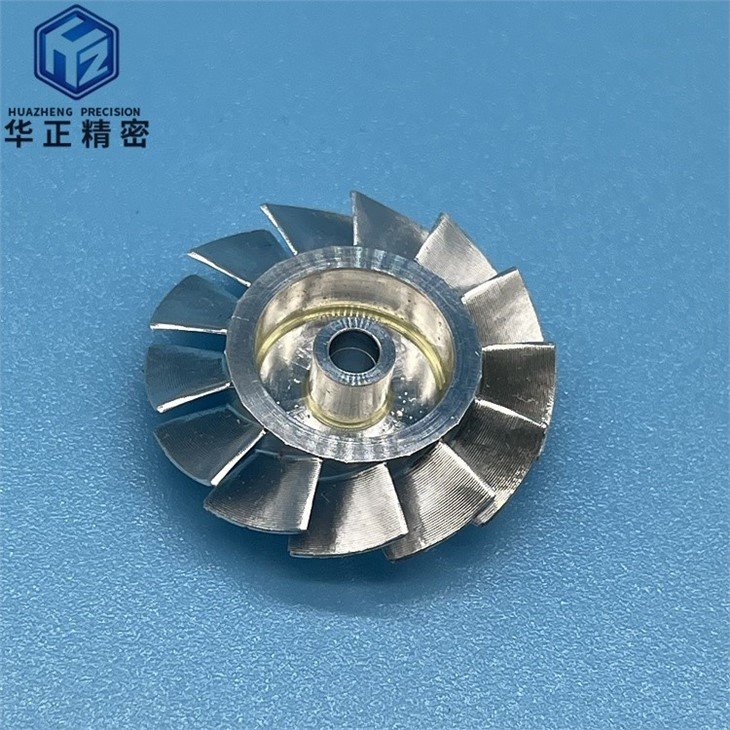

If you are in need of high - quality 5 Axis Machined Heat Sinks, we invite you to contact us for procurement and further discussions. Our team is ready to provide you with professional advice and customized solutions to meet your specific requirements.
References
- "CNC Machining Handbook", Industrial Press Inc.
- "Machining Fundamentals", Society of Manufacturing Engineers.
- Technical documentation from cutting tool manufacturers.


