


CNC Turning
Your Leading CNC Turning Supplier
Shenzhen Huazheng Precision Technology Co., Ltd.was founded in 2005 as a professional CNC machining manufacturer. The factory covers an area of 2000㎡and we have over 60 employees.
Why Choose Us?
High quality
We have multi-layer inspection process and more than 4 inspectors to check the quality of products and we can provide inspection report to ensure your custom parts are full checked.
Competitive Price
We offering a higher-quality product or service at an equivalent price. As a result we have a growing and loyal customer base.
Rich experience
We have an experienced technical team with more than 10 years of experience.
Customized services
We can provide one-stop service to fulfill your whole project, including various surface treatment, die casting, sheet metal and assembly service as well.


Product Categories

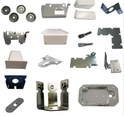
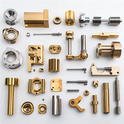

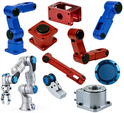
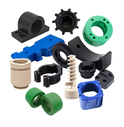

CNC Turning is a manufacturing process in which bars of material are held in a chuck and rotated while a tool is fed to the piece to remove material to create the desired shape. A turre, with tooling attached is programmed to move to the bar of raw material and remove material to create the programmed result. This is also called “subtraction machining” since it involves material removal. If the center has both tuning and milling capabilities, the rotation can be stopped to allow for milling out of other shapes.
Benefits of CNC Turning
More ideal for cylindrical workpieces: CNC turning is better at machining cylindrical parts compared to CNC milling.
Increased accuracy and tighter tolerances: Turning cylindrical parts allows for more accuracy and tighter tolerances when cutting the workpiece.
Improved surface finishes: CNC turning can achieve higher-quality surface finishing when machining cylindrical shapes.
Optimized efficiency:Compared to CNC milling, CNC turning can machine cylindrical parts with enhanced efficiency. While you can still mill a cylindrical part, it may not be as accurate or efficient as turning it.
Boosted flexibility with turn/mill options:CNC turning centers with some milling capabilities offer more flexibility. Having turn/mill options also eliminates the need to purchase a separate milling center, improving cost-effectiveness.
Types of CNC Turning
Horizontal turning centers
Horizontal turning centers are enclosed devices with drilling and milling functionalities. As the name indicates, the turning center has a horizontal orientation with tools mounted above as they rotate and cut into the workpiece and depends on gravity to remove the cuts.
Vertical turning centers
This device acts as a combo of a horizontal turning center and a CNC miller. Its design makes the rotating chuck close to the ground – making it easier to work with large workpieces.
Application of CNC Turning
Automotive industry: CNC turning is widely used in the automotive industry for manufacturing various components such as shafts, pistons, cylinders, gears, and brake system parts. It enables precise machining of critical engine and transmission components that require high accuracy and tight tolerances.
Aerospace industry: CNC turning plays a crucial role in the aerospace industry, producing components like turbine shafts, landing gear parts, engine components, and flight control system parts. Its ability to handle high-strength materials and achieve intricate geometries is essential for aerospace applications that demand precision and reliability.
Medical equipment: CNC turning is extensively used in the production of medical equipment and devices. It is employed to manufacture components like surgical instruments, implants, prosthetics, and dental parts. The high precision and quality achieved through CNC turning ensure proper fit, functionality, and biocompatibility in medical applications.
Electronics and electrical industry: CNC turning is utilized for producing electrical connectors, terminals, and other precision components used in the electronics industry. It allows for efficient mass production of small-sized parts with tight tolerances, ensuring reliability and consistency in electrical and electronic devices.
Industrial machinery: CNC turning is an essential process in the production of various industrial machinery components, including shafts, pulleys, couplings, and bushings. It enables the creation of accurate and durable parts that are critical for the smooth operation of machinery in manufacturing plants and other industrial settings.
Tool and die making: CNC turning is commonly employed in tool and die making, where it is used to produce molds, dies, and tooling inserts. It facilitates the creation of complex shapes and contours required for manufacturing custom tools, ensuring precise and repeatable results in the production process.
General manufacturing: CNC turning is widely applied in general manufacturing for producing a wide range of components, such as fasteners, fittings, valves, and plumbing fixtures. Its versatility, speed, and accuracy make it a cost-effective solution for meeting the machining needs of diverse industries.
Components of CNC Turning
Headstock
A turning center’s headstock makes up the machine’s front part. It is usually located on the machine’s left side as it houses the main spindle where the chuck attaches to hold the workpiece. Therefore, the headstock holds the driving motor and the mechanisms for powering the spindle.
The spindle bar’s capacity will determine the workpiece’s maximum diameter to mount through the headstock.
Tailstock
This is the other end of the turning center. The tailstock attaches to the lathe bed, intending to support longer raw materials. The quill of the tailstock offers this support using hydraulic force. While the driving force comes from the spindle, the tailstock runs along with the workpiece.
However, you shouldn’t use a tailstock when face turning is important. The tailstock will be in the way of the operation.
Spindle
Many people refer to the spindle as the heart of the machine tool. The main spindle of the CNC turning lathe consists of a spindle drive system and a spindle assembly. They are moving parts of the machine tool, including motors, gears, and chuck.
Some CNC turning centers use a sub-spindle or dual spindles. These centers often use the second spindle instead of a tailstock. The sub-spindle moves longitudinally towards the primary spindle under the control of computer instruction. This way, it is possible to machine the backside of workpieces without needing additional loading/unloading during the process.
Chuck and collet
The chuck holds the part by its jaws, attaching directly to the spindle. However, it is replaceable, allowing the machining of different-sized parts. On the other hand, a collet is a smaller version of the chuck, which allows the machining of smaller parts. The parts suitable for a collet are often about 60 mm since they provide better grips for smaller pieces.
Lathe bed
The bed, usually made with cast iron material, is the base plate resting on the table under the workspace. This component provides support for several fixed and operational parts. The bed connects to the headstock and runs through to the tailstock. The tool turret and other attachments run across the length of the bed.
Carriage
This component supports the tool turret, feeding and guiding it against the workpiece. The carriage consists of the turret, saddle, and cross-slide. CNC turning centers with live tool turrets usually have powered rotary tools for milling operations. This ability increases the machine’s functionality while reducing or eliminating secondary operations.
Tool turret
In place of the carriage, newer improved machines come with the tool turret. These ones can hold more tools at once, allowing you to change the cutting tools needed for a specific operation. This means you can switch from one operation to another without taking time.
Control panel
Here is where the computer numerical control comes in. It is the brain behind CNC turning operations, allowing the operator to adjust programs before starting the process.
Material of CNC Turning
1.Aluminum
Aluminum is often used in precision turning because it is lightweight, non-magnetic, inexpensive, corrosion-resistant, and easy to machine. Aluminum machining allows for tight tolerances even for complex or intricate parts. Aluminum can also be plated with other materials to increase its conductivity and hardness, providing a less expensive alternative to copper, steel, or stainless steel.
2.Brass
Brass is a very cost-effective material choice for precision turned components that don’t require high levels of strength. Brass machining comes with a variety of benefits, including a clean finish, easy machining, and well-held tolerances and threads. This metal is ideal for use in more complex parts that include sophisticated details; however, it’s not suitable for vacuum applications or semiconductor products because of its tin and zinc content.
3.Copper
Copper is a more expensive but versatile choice for CNC precision turning. This metal is naturally corrosion-resistant, electrically conductive, and nonmagnetic. Copper responds well to precision turning; however, it does not hold tolerances as well as other metals such as aluminum. This metal is a great choice for hardware components and electric parts.
4.Titanium
Titanium is a very popular option for precision turning due to its heat resistance, corrosion resistance, and significant strength-to-weight ratio. Additionally, titanium is lightweight, biocompatible, and inert, making it suitable for various applications ranging from medical components to aviation parts. However, the downsides of titanium include its higher price and difficulty to machine.
5.Steel
Many manufacturers use steel for its durability and strength. The properties of steel alloys depend on the specific grade, and different alloying elements increase the material’s overall machinability. Some specific uses for steel materials include industrial applications, oil & gas, and automotive manufacturing. However, this metal is vulnerable to corrosion without plating.
6.Stainless steel
Stainless steel is a desirable material option for CNC precision turning due to its corrosion resistance and strength. It also offers an attractive appearance and retains its durability, making it an ideal choice for consumer, commercial, and medical products. However, its strength and hardness often make stainless steel machining more challenging.
7.Carbon steel
Carbon steel features higher carbon levels that contribute to its particularly hard and durable nature. Carbon steel can be machined; however, its machinability decreases with the increased hardness of each carbon steel grade. Following the production process, carbon steel is highly damage-resistant, dimensionally stable, and maintains its characteristics when exposed to high temperatures.
1.Designing the part - A detailed CAD (Computer-Aided Design) model of the part to be manufactured is created using specialized software packages.
2.Converting to the CAM program - The CAD model is translated into a CAM (Computer-Aided Manufacturing) program, which generates the machine code that controls the CNC machine.
3.Programming the machine - The operator programs the CNC machine with specific instructions for the cutting process, including the movement of the cutting tool, the speed of the lathe, and the pattern of the cuts.
4.Setting up the machine - The CNC lathe is prepared by setting up the required tools in the turret and configuring the machine settings according to the material and part specifications and the required software program is loaded in the machine.
5.Mounting the workpiece - The raw material is secured in the chuck of the lathe, ensuring it is held firmly for precision machining.
6.Machine calibration - A calibration run is performed to confirm the setup is correct and adjust the tool positions as necessary.
7.The machining process - The CNC turning operation is started and the machine follows the programmed path to remove material from the workpiece, shaping it according to the design automatically.
8.Monitoring the process - The machining process is supervised for any issues or adjustments needed, ensuring optimal operation.
9.Quality checking - After machining, the finished part is inspected for accuracy and quality, comparing it to the CAD model specifications.
10.Post-processing - Any necessary post-processing steps, such as cleaning, polishing, or applying surface treatments to the part are done.
11.Final inspection and testing - A final quality control check is done, ensuring the part meets all required specifications and tolerances.
Direction
Milling: Milling involves stationary cutters with moving workpieces, allowing for versatile shapes.
Turning: Turning rotates the workpiece against a stationary tool, primarily creating cylindrical parts.
Shapes
Milling: Choose milling when your part features intricate shapes, non-rotationally symmetric designs, or requires slots, pockets, and complex contours.
Turning: Opt for turning when your part exhibits rotational symmetry, cylindrical or conical shapes, or requires external cuts with fewer complexities.
Material choice
Milling: CNC milling can handle a wide array of materials with varying hardness, including metals, plastics, and composites.
Turning is especially suited for rotationally symmetric materials. Wood and composites are generally not well suited for turning given their density and abrasiveness.
Production volume
Milling: While CNC milling can handle mass production, it is most cost-effective for smaller to medium-sized runs where parts are complex, and precision is paramount. It’s also suitable for prototyping and custom orders.
Turning: Turning excels at mass production due to high speeds and consistency for rotationally symmetric components.

What are Operations That Can Be Performed with CNC Turning?
CNC turning is not a one-trick pony; it’s a versatile process capable of executing various operations. Each operation caters to specific requirements, from basic shaping to complex detailing.
Turning Specific Operations (External)
- Turning
Turning, the most fundamental of CNC operations, involves rotating a workpiece on a lathe while a cutting tool shapes it to the desired form. This process excels in producing cylindrical parts and is crucial in fabricating items such as shafts, pins, and rods. It’s marked by its ability to achieve high surface finishes and dimensional accuracy.
- Hard turning
Hard turning is a specialized operation that focuses on materials with high hardness ratings. This process often replaces grinding and involves cutting materials that are hard to shape. It’s known for its precision and ability to achieve fine finishes on tough materials, making it a go-to for components requiring high wear resistance.
- Taper turning
Taper turning is a technique used to produce conical shapes by gradually changing the diameter of the workpiece over its length. It’s essential for parts like cones and tapered shafts, offering a high degree of accuracy. This operation is critical for components that need to fit into specific angular spaces.
- Facing
Facing involves removing material from the end of a workpiece to produce a flat surface. It’s often the first step in CNC turning operations and is crucial for preparing the ends of a piece for further machining. This process is vital for achieving precise face flatness and perpendicularity to the axis of the workpiece.
- Grooving
Grooving in CNC turning is the process of cutting a groove into the surface of a workpiece. It’s commonly used for O-ring grooves, oil grooves, or where a specific recess is needed. The precision of CNC turning allows for exact groove dimensions, essential for parts requiring specific fits.
- Parting
Parting, also known as cutoff, is the operation of cutting a workpiece through its diameter to separate it into two parts. This technique is used to create discrete components from a longer workpiece. It’s a critical step in the production of multiple parts from a single piece of material.
Non-specific operations (internal)
- Drilling
Drilling in CNC turning involves creating cylindrical holes in a workpiece. This operation is essential for parts requiring assembly, such as those needing bolts or pins. The precision of CNC machines ensures that these holes are drilled accurately, both in terms of diameter and depth.
- Boring
Boring is used to enlarge pre-existing holes or to improve their dimensional accuracy and surface finish. This internal operation is crucial for parts that require precise hole dimensions or a specific internal surface finish. It’s particularly important for components where hole diameter plays a critical role in functionality.
- Threading
Threading in CNC turning involves creating internal or external threads on a workpiece. This operation is fundamental for components that need to be assembled with screws or bolts. The precision of CNC turning ensures accurate thread pitch and depth, which are essential for the functionality of threaded joints.
- Knurling
Knurling is the process of creating a patterned surface on a part to improve grip. This operation is commonly used on tool handles, knobs, and fasteners. CNC turning allows for precise control over the knurl pattern, ensuring consistent quality and the correct level of grip.
- Reaming
Reaming is used to refine the size and finish of pre-drilled holes. This operation is crucial for achieving tight tolerances and smooth internal surfaces. It’s particularly important in high-precision industries, where the exact diameter and surface finish of holes can significantly impact the overall functionality of a part.
CNC Turning’s Unique Capabilities
Advanced design geometries
Cutting-edge CNC turning machines bring unparalleled versatility to the table, enabling a broad spectrum of geometries that were once considered impractical.
The advanced software integrated into these machines translates intricate designs from CAD files into executable machine instructions, making even the most complex geometries achievable.
This expansion in geometric capabilities means that designers and engineers now have the freedom to explore more complex part designs without worrying about manufacturing limitations.
Material and design versatility
Modern CNC turning machines are engineered to work with a diverse array of materials. Whether you require stainless steel components for automotive applications or high-performance superalloys for aerospace engineering, today’s turning centers can handle the job with ease.
The inclusion of multi-axis capabilities in these centers further broadens the range of complex geometries they can accurately produce. These multi-axis functionalities also optimize tool paths, providing faster production times without sacrificing quality.
Meeting extreme tolerances
Industries like aerospace, defense, and power generation often require components that adhere to extreme tolerances, sometimes down to micrometers.
High-quality CNC turning centers can not only work with hard-to-machine materials but can also maintain tight tolerances that are crucial for these specialized applications.
Cutting-edge feedback systems within the machine continually monitor and adjust for any deviations, ensuring consistent quality.
High thermal and chemical resistance
Beyond just mechanical properties, CNC turning centers excel in machining materials with high thermal and chemical resistance, such as ceramics and engineered plastics.
This specialized feature is critical for industries like petrochemical and aerospace, where components are exposed to extreme environmental conditions including high temperatures and corrosive atmospheres.
State-of-the-art cooling and lubrication systems further ensure process stability and quality, particularly when dealing with these challenging materials.
Consider All Aspects of CNC Turning Centers
Once you have determined the features and capabilities your ideal CNC turning Center should have, you will need to determine the optional features that can enhance your operation by removing material faster, providing more capabilities and production output volume. Several features to consider are;
Horsepower: Generally the higher the power, the higher the material; removal rate capabilities
RPM: The higher the rpm the better suited your machine is for small parts and softer materials.
Chip control: Your machine will need some sort of waste management system to remove the chips from the workzone, chip augers or conveyors.
Live tools: Adding powered or driven tooling allows many features to be machines in one setup without having to remove your parts to a second machine or subsequent setup.
Additional axis: A CNC Turning Center starts with a basic X & Z Axis that controls the Diameter and length of your parts features. Additional axis such as a Y-Axis can allow for advanced feature machining such as off center hole drilling, special pocket machining and much more.
Automation upgradeability: Another futuristic aspect of your machine tool search should include the machine's capability to be upgraded with more advanced automation and features down the road as new work and needs arise.
1.Increase your speed
This really applies most when using carbide tools. When you increase the surface feet per minute speed (SFM), you will ensure that the material is in contact with the tool tip for a shorter amount of time and will also reduce edge buildup on the tool, which causes poor surface finishes.
2.Reduce your feed rate
Reducing the feed rate helps to improve surface finish. This will also help to reduce flank wear and prolong the insert’s longevity. In addition, doubling the nose radius will help to improve surface finish. For roughing applications, it’s best to use a tool capable of a high feed rate to remove material quickly. For finishing, it’s best to have a lower feed rate and shallower cut.
3.Increase the top rake angle
Positive rake angles will lead to a finer surface finish, requiring lower cutting forces. Using a 45° cutter will act downward, possibly making the part flex. As a result, this will cause the back half of the cutter to recut the machined part and create a poor surface finish. Using a 90° cutter will create cutting forces parallel to the part and will not flex it. This will produce a smoother surface finish.
4.Use a chip breaker
A poor surface finish can also be caused by improper chip breaking, downtime to remove chips and higher temperatures at the tool’s cutting edge. A chip breaker can produce smaller chips that are cleared from the cutting area quickly. And because there is no longer a need to clear chips by hand, safety is improved.
If the chip breaker can break the chips into adequate lengths, then vibration will be minimized; the chips will not wrap around the workpiece and tools will not be damaged. Chip breakers also reduce cutting resistance, which can avoid chipping or breaking the cutting edge. A lower cutting resistance can decrease heat and delay tool wear.
5.Use a large nose radius
The idea is to use a larger nose radius and decrease the feed rate to get a smoother, finer surface finish. This is because the nose radius and depth of cut affects the shape and direction of chips. Therefore, it’s best to use the largest radius possible to achieve the best surface finish and avoid creating chatter (machine vibration). But, on the other hand, a larger nose radius will increase demands on the tool, causing vibration and poor chip breaking, whereas a smaller nose radius produces thinner chips that are easier to clear away from the workpiece, but this will also limit the feed rate.
6.Use an insert with a wiper
To ensure a good surface finish, use a special wiper insert that has a modified nose radius with larger corners to wipe the surface smooth. This will allow you to cut at a faster feed rate.
7.Use the right technique
Creating a chip that is thick-to-thin is what you want. Your technique plays a vital role in getting smooth surface finishes. Choose a cutter that is smaller than the nose radius so you can program it for a smooth transition from line-to-line.
When you run your final cuts, don’t just limit yourself to checking your workpiece; you should also read your chips. The characteristics of your chips will indicate what machining set up or tooling adjustments are necessary.
8.Use different tools for roughing and finishing
Some may say that the same inserts can be used for both roughing and finishing. But it’s best to use separate inserts, one for roughing and one for finishing. For roughing, you can use a course-pitch cutter with a large nose radius, and a large rake angle with a rapid feed rate. For finishing, you can use a fine-pitch finishing tool with the proper lead angle and a wiper flat, which will give you a better surface finish.
9.Clear the chips
There is a debate whether to use coolant in milling applications. But it all depends on the type of work you’re doing, such as deep cavity milling, the type of material and which insert you are using. Using coolant, in some cases, should be avoided. It may cause thermal cracking and shorten tool life and could affect the surface finish negatively. But with aluminum, low-carbon steel or nickel-based alloys, using coolant will prevent the tool from sticking to the workpiece.
10.Check your toolholding and workholding
It’s a good idea to check the condition of your toolholder. An old, worn-out toolholder may cause the insert to move. This will cause chatter and will negatively affect the surface finish of your part. You also want a rigid workholding that is stable, especially with a higher metal removal rate.
Our Factory
We have an experienced technical team with more than 10 years of experience. The product processing accuracy can be controlled to 0.01mm.

FAQ
