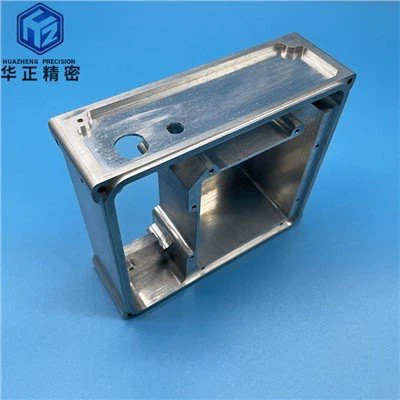


Your Leading CNC Aluminium Parts Supplier
Shenzhen Huazheng Precision Technology Co., Ltd.was founded in 2005 as a professional CNC machining manufacturer. The factory covers an area of 2000㎡and we have over 60 employees.
Why Choose Us?
High quality
We have multi-layer inspection process and more than 4 inspectors to check the quality of products and we can provide inspection report to ensure your custom parts are full checked.
Competitive Price
We offering a higher-quality product or service at an equivalent price. As a result we have a growing and loyal customer base.
Rich experience
We have an experienced technical team with more than 10 years of experience.
Customized services
We can provide one-stop service to fulfill your whole project, including various surface treatment, die casting, sheet metal and assembly service as well.

Are you Looking for low cost CNC milling Aluminium parts with best quality? Shenzhen HuaZheng Precision Technology Co., Ltd is a professional China CNC company provides superior precision CNC milling services with advanced machines including CNC milling center and milling machining centers from the general 3-axis to 5-axis and accomplished machinists. If you have any parts need to be machined. Please contact with us.

Anodizing CNC Machining Products
1. Architectural industry: structures, residential and commercial building exteriors and products
2. Home appliances and furniture: televisions, refrigerators, microwave equipment, etc.

Precision Aluminium CNC Milling Service
CNC milling (computer numerical control milling) is a CNC machining process that involves removing material from the workpiece by rotating and moving a cutting tool, such as a milling cutter, and positioning the workpiece properly, to produce or finish a custom CNC machining object.

CNC Machining Aluminium Spare Parts
Aluminum alloy has good mechanical properties, small density, good conductivity and thermal conductivity, so aluminium spare parts are widely used in industry. The strength and hardness of aluminum alloy are low, and the cutting load is small.

Machined Aluminium Auto Accessories
We are specialized manufacturers from China, Machining Aluminum, Fluorocarbon Machining Aluminium suppliers/factory, wholesale high-quality products of Alumiunum Machining R & D and manufacturing, we have the perfect after-sales service and technical support.

CNC Machining Aluminium Motorcycle Parts
Production introduction: CNC Machining refers to precision machining, CNC machining lathes, milling machines, boring and milling machines, etc. Cnc processing is a kind of processing method that simplifies the processing procedure. The advantage is that the processed products have high precision...
Machined Aluminium6061 Auto Parts
We have more than 30 sets advanced processing equipment including 3-axis, 4-axis, 5-axis CNC and gantry CNC, milling machine, lathe, drilling machine, sandblasting machine and so on. The surface treatment can be sandblasting,anodizing,painting, powder coated, electroplating, polishing etc.

We provide Custom CNC Machining services, good at drawing your drawings through our work into high-quality products.Production of thousands of Precision Metal Machining parts, serving many different famous car company.

Black Anodized Aluminum Machined Parts
The black anodized aluminum parts provided by us are made of 6061 aluminum using CNC milling, turning and drilling machines for a variety of equipment.

CNC machined aluminum parts refer to components that are produced using computer numerical control (CNC) machining processes on aluminum material.
1.Machinability
Aluminium is readily formed, worked, and machined using a variety of processes. It can be quickly and easily cut by machine tools because it is soft and it chips easily. It is also less expensive and requires less power to machine than steel. These characteristics are of immense benefits to both the machinist and the customer ordering the part. Furthermore, aluminium's good machinability means it deforms less during machining. This leads to higher accuracy as it allows CNC machines to achieve higher tolerances.
2.Strength-to-weight ratio
Aluminium is about a third of the density of steel. This makes it relatively light. Despite its lightweight, aluminium has very high strength. This combination of strength and light weight is described as the strength-to-weight ratio of materials. Aluminium's high strength-to-weight ratio makes it favourable for parts required in several industries such as the automotive and aerospace industries.
3.Corrosion resistance
Aluminium is scratch resistant and corrosion resistant in common marine and atmospheric conditions. You can enhance these properties by anodizing. It's important to note that resistance to corrosion varies in different aluminium grades. The most regularly CNC machined grades, however, have the most resistance.
4.Performance at low temperatures
Most materials tend to lose some of their desirable properties at sub-zero temperatures. For example, both carbon steels and rubber become brittle at low temperatures. Aluminium, in its turn, retains its softness, ductility, and strength at very low temperatures.
5.Electrical conductivity
The electrical conductivity of pure aluminium is about 37.7 million siemens per metre at room temperature. Although aluminium alloys may have lower conductivities than pure aluminium, they are conductive enough for their parts to find use in electrical components. On the other hand, aluminium would be an unsuitable material if electrical conductivity is not a desirable characteristic of a machined part.
6.Recyclability
Since it is a subtractive manufacturing process, CNC machining processes generate a large number of chips, which are waste materials. Aluminium is highly recyclable which means it requires relatively low energy, effort, and cost to recycle. This makes it preferable to those who want to recoup expenditure or reduce material wastage. It also makes aluminium a more environmentally-friendly material to machine.
7.Anodisation potential
Anodisation, which is a surface finishing procedure that increases the wear and corrosion resistance of a material, is easy to achieve in aluminium. This process also makes adding colour to machined aluminium parts easier.
Types of CNC Aluminium Parts
6061-T6 is one of the most popular aluminum alloys on the market and most manufacturing companies offer it as the standard grade for CNC machining. It's versatile, easy to machine, and 6061 can even have different heat treatments.
6061-T6 is an excellent all-purpose material applicable to a wide variety of use-cases. Even though this material has a good strength-to-weight ratio, it's ill-suited for high-stress applications. Common applications include automotive parts like chassis, bicycle frames, valves, computer parts, and much more.
For high-stress or high-performance applications, engineers should consider 7075-T6. This grade of aluminum is well known for its excellent strength-to-weight ratio and its hardness can even be comparable to that of some softer steels.
Widely used for high-stress applications in the aerospace and military industries, common applications include aircraft fittings, missile parts, and fuse parts. Certain high-performance bikes and sporting goods also include parts made from aluminum 7075-T6.
Aluminum 2024-T4 is a moderate- to high-strength alloy that offers good fatigue resistance and fracture toughness. Aluminum 2024-T4 isn't as strong as 7075-T6, but it's still suitable for aerospace applications.
Common applications for aluminum 2024-T4 include aircraft fuselage, transport vehicle parts, and wing tension members. However, product teams should note that this grade of aluminum has poor corrosion resistance and is highly sensitive to thermal shock.
Aluminum MIC 6 is unique because of its specific combination of alloy and casting method that was developed for producing stable, high-tolerance plates. MIC 6 has impressive stress-relieving properties, excellent accuracy, and high machinability. Aluminum MIC 6 is also contaminant- and porosity-free. This smooth, lightweight option can be found in machining components, electronics, and even laser technology.
Aluminum 6082 has similar properties to aluminum 6061; however, 6082 has a slightly higher tensile strength. Further, this type of aluminum has the highest strength out of all of the 6000 series alloys and it's exceptionally corrosion-resistant. 6082 is a good option for engineers who want more strength than what 6061 offers, but don't want to invest in the 7000 series.
Aluminum 6082 is well-suited for general purpose applications that need an added degree of strength and toughness. This material is popular in the construction industry and can be found in many bridges, towers, and trusses.
Application of CNC Aluminium Parts
Aerospace & aviation
In the realm of aerospace and aviation,precision and weight are paramount.Aluminium CNC parts cater to this perfectly. Their lightweight nature aids in fuel efficiency and performance, while their strength ensures the components can withstand the rigors of flight. The precise nature of CNC machining also ensures that these parts fit seamlessly into intricate aerospace assemblies.
Automotive industry
Vehicles, be they traditional or electric, demand durable and lightweight parts.Aluminium CNC components fulfill this requirement, offering optimal weight-to-strength ratios. In the modern automotive world, where efficiency and performance are critical,these parts play a pivotal role. from engine components to chassis elements, ensuring vehicles are both robust and fuel-efficient.
Electronics
Electronics require components that can efficiently dissipate heat while offering protection and durability. Aluminium, with its excellent thermal conductivity, is ideal for crafting heat sinks and cooling solutions. Furthermore, the sleek finish and durability of aluminium CNC parts make them perfect for external enclosures, giving gadgets both a premium look and longevity.
Medical devices
The medical sector demands precision and reliability, and aluminium CNC parts are up to the task. Whether it's surgical instruments that require pinpoint accuracy or prosthetic elements that must be both lightweight and strong, aluminium is the go-to material. Its corrosion resistance also ensures hygiene, a crucial aspect of medical applications.
Robotics & automation
Robots and automated systems operate in diverse environments, performing various tasks. They require components that are reliable, durable, and adaptable. Given their strength and malleability,aluminum CNC parts are often integral in these systems. Whether it's a robot's arm or the gears in an automated assembly
line, these parts ensure smooth, efficient operations.
Process of CNC Aluminium Parts
1.Designing the part: Use CAD (Computer-Aided Design) software like AutoCAD, SolidWorks, or Fusion 360 to create a 3D model of the part.Ensure that the design meets all the required specifications, including dimensions, tolerances, and material requirements.
2.Material selection: Choose the appropriate grade of aluminum for your specific application. Common aluminum alloys used for CNC machining include 6061, 7075, and 6063, each offering different properties such as strength, corrosion resistance, and machinability.
3.CAM programming: Convert the 3D CAD model into machine-readable instructions using CAM (Computer-Aided Manufacturing) software.Define machining operations such as milling, drilling, turning, and threading, along with toolpaths and cutting parameters.
4.Tooling selection: Select the right cutting tools (end mills, drills, etc.) based on the material, geometry, and complexity of the part.Consider factors like tool diameter, flute type, coating (e.g., TiN, TiCN, TiAlN), and cutting speeds/feed rates for efficient machining.
5.CNC machining: Set up the CNC machine with the chosen aluminum stock and secure it firmly in place.Load the CAM program into the CNC machine and run simulations if needed to verify toolpaths and avoid collisions.Start the machining process, which involves cutting away excess material to create the final part as per the design specifications.
6.Quality control: Inspect the machined part using measurement tools such as calipers, micrometers, and CMM (Coordinate Measuring Machine).Check critical dimensions, surface finish, and overall quality to ensure they meet the required standards and tolerances.
7.Finishing operations (optional): Perform secondary operations like deburring, sanding, anodizing, or coating to enhance the part's aesthetics, durability, or functionality.
8.Assembly and testing (if applicable): If the part is part of a larger assembly, ensure proper fitment and functionality by assembling it with other components.Conduct functional tests or quality checks to validate the part's performance and compatibility with the overall system.
9.Documentation and traceability: Maintain detailed records of the manufacturing process, including design files, CAM programs, machining parameters, inspection reports, and material certifications.Ensure traceability of the parts back to their origins for quality assurance and compliance purposes.
Tips When CNC Machining Aluminum
The role of aluminum CNC machining is central to the production of many day to day appliances and equipment. Adhering to the following tips when CNC machining aluminum ensures quality products while also keeping you safe.
Always apply lubricant:Lubricating your action area between tool and aluminum material reduces friction making the CNC machining process easier. It also ensures the edges are straight and prevents heat damage.
Always remove formed chips:Allowing chippings to accumulate around your tool can result in breakage and aluminum deformation.
Do not hasten the process:Employ the appropriate feed rate and speed depending on the tool, aluminum grade and machining process. You shouldn't also employ very slow fed rates as it would only blunt the tool.
Go with cutters with small diameters:This is especially true when trying to achieve a deep cutting depth as it makes the process smoother.
Use the appropriate tool:For instance, when working on aluminum, carbide tools are preferable compared to HSS and cobalt.
An Overview of Aluminum Machining Processes
Aluminum CNC machining involves various processes that transform raw aluminium into intricate parts. The most common machining processes include:
CNC milling: This process involves removing material using rotating cutting tools. It's suitable for creating complex shapes and achieving precise dimensions.
CNC turning: Turning utilises a lathe to rotate the aluminium while cutting tools shape the material. This is often used to create cylindrical parts.
Drilling and tapping: Drilling creates holes while tapping adds threads to those holes. These processes are essential for assembling various components.
Engraving: Engraving is used to add designs, text, or patterns to the surface of the aluminium parts.
Surface finishing: After machining, surface finishing techniques like polishing, anodising, or powder coating can enhance the appearance and durability of the parts.
What Are the Common Challenges Faced in Aluminium CNC Machining?
1.Material properties: Aluminium is a soft and ductile metal, which can make it challenging to machine. It can easily deform or warp during the machining process, leading to dimensional inaccuracies and surface finish issues.
2.Chip control: Aluminium tends to produce long, stringy chips during machining, which can cause problems with chip evacuation and can also lead to tool breakage.
3.Tool wear: Aluminium is a highly abrasive material, which can cause rapid tool wear and reduce tool life. This can result in increased machining time and higher production costs.
4.Heat dissipation: Aluminium has a high thermal conductivity, which means it can quickly dissipate heat during machining. This can cause problems with tool temperature and can affect the accuracy of the machining process.
5.Surface finish: Achieving a smooth and consistent surface finish on aluminium can be challenging due to its soft and ductile nature. This can be especially difficult when machining complex shapes and features.
6.Tight tolerances: Aluminium is a relatively soft material, which can make it difficult to hold tight tolerances during machining. This can be a significant challenge when machining precision parts.
7.Workholding: Due to its softness, aluminium can be challenging to hold securely in place during machining. This can lead to part movement and inaccuracies, resulting in scrapped parts and increased production costs.
8.Burrs and sharp edges: Aluminium can produce sharp burrs and edges during machining, which can be difficult to remove and can affect the overall quality of the part.
9.Machining speed: Aluminium is a relatively soft material, which means it can be machined at high speeds. However, this can also lead to problems with tool wear and surface finish if not properly controlled.
Surface Finishing in CNC Machining Aluminum Parts
Surface finishing is a critical aspect of CNC machining that enhances the aesthetic, functional, and performance characteristics of aluminum parts. Here's a detailed description of the importance of surface finish and common techniques used in CNC machining for aluminum parts:
Anodizing
Anodizing is an electrochemical process that enhances the corrosion resistance and durability of aluminum parts. The aluminum part is immersed in an electrolytic solution, and an electric current is passed through to stimulate the formation of an oxide layer on the surface. This oxide layer not only provides a protective coating but can also be dyed to achieve various colors. Anodizing is widely used in the aerospace, automotive, and consumer electronics industries.
Polishing
Polishing is a mechanical process that involves the removal of surface imperfections and scratches to achieve a smooth and reflective finish. Various polishing techniques, such as abrasive polishing, buffing, and chemical polishing, can be employed based on the desired level of shine. Polishing is often used for high-end consumer products, decorative components, and parts requiring enhanced visual appeal.
Coating
Coating involves applying a thin layer of material onto the surface of the aluminum part. Common coating types include powder coating, paint, and protective coatings. Powder coating involves applying a dry powder that adheres electrostatically to the surface and is then cured to form a durable finish. Paint provides a versatile option for achieving different colors and finishes. Protective coatings may include anti-corrosive coatings for enhanced durability.
Our Factory
We have an experienced technical team with more than 10 years of experience. The product processing accuracy can be controlled to 0.01mm.