

5-Axis CNC Machining
Your Leading 5-Axis CNC Machining Supplier
Shenzhen Huazheng Precision Technology Co., Ltd.was founded in 2005 as a professional CNC machining manufacturer. The factory covers an area of 2000㎡and we have over 60 employees.
Why Choose Us?
High quality
We have multi-layer inspection process and more than 4 inspectors to check the quality of products and we can provide inspection report to ensure your custom parts are full checked.
Competitive Price
We offering a higher-quality product or service at an equivalent price. As a result we have a growing and loyal customer base.
Rich experience
We have an experienced technical team with more than 10 years of experience.
Customized services
We can provide one-stop service to fulfill your whole project, including various surface treatment, die casting, sheet metal and assembly service as well.






Product Categories

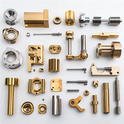

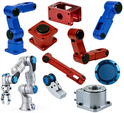
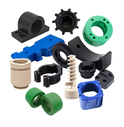
Benefits of 5-Axis CNC Machining
Machine complex shapes
The additional axis added to this machine makes machining designs and geometries with high complexity easy. Also, machining difficult angles and arcs, which is previously achievable using multiple special fixtures, has become feasible with 5-axis CNC machines. In addition, the ability of this machine to rotate parts during a single operation makes it possible to achieve desired geometries with the need for complex machines or fixtures.
High precision and repeatability
Manual machining operations require extra setups for optimal machining. But these extra setups often introduce design variability and error, causing machinists to lose alignment during machining. However, 5-axis CNC milling involves minimal setups, eliminating the possibility of errors while improving accuracy.
Also, with most 5-axis CNC machines used by machinists today, there is no need for manually repositioning the workpiece during machining. This guarantees improved machining tolerances. What’s more, using shorter cutting tools in some machine configurations improves tool lifespan while ensuring repeatability.
Effective setup operations
The process of setting up a 5-axis CNC machine is relatively easier than setting up a 3-axis machine. The reason is that 5-axis CNC machines allow work on five surfaces simultaneously. Moreover, 5-axis machines enable the machining of contoured parts with a single structure. However, for conventional 3-axis machines, several setups are necessary to work on several faces.
Quality surface finish
The surface finish with a 5-axis CNC machine is smoother due to the presence of additional axes. These additional axes bring the workpiece closer to the cutting tool, making it easier to achieve desired shapes. It also allows the use of shorter cutting tools for machining.
With shorter cutting tools, there is little to no vibration, which reduces the incidence of marks on the surface of finished products. Moreover, there is an improvement in spindle utilization for machining angled surfaces when employing the vertical machining process.
High production efficiency
The 5-axis machining can effectively reduce the machining time and auxiliary time of the parts. It has a large range of spindle speed and feeds rage, allowing the machine to perform a powerful large cutting capacity. 5-axis CNC is entering an era of high-speed machining. The rapid movement and positioning of 5-axis machining and high-speed cutting processing reduce the turnaround time for semi-finished products.

Indexed CNC machining
With an indexed CNC machine, also known as 3+2 axis machining, cutting tools only move continuously along three axes, while the table that holds the block of material will swivel in two rotational axes. 4 axis machining, acting as 3+1 machining, is where the spindle tool moves on 3 axes (X, Y, and Z axes) and a table holding the material moves and rotates on the fourth axis, the A axis. The rotation makes the 4 axis CNC machine produce faster than a 3 axis, but still involves some manpower to reposition the material. Indexed machining is still more precise and efficient than a 3-axis machine, but not as fast as a tool on 5 axes because the tool intermittently touches the block piece.
Continuous CNC machining
A continuous 5 axis machine lets the cutting tool move on all five axes to ensure that the tip of the tool maintains the same point on the block. The cutting tool maintains engagement with the material at all 5 machining angles even when the holding table moves, maximizing use of the entire workstation with much less manpower involved.
Mill-turn CNC machining
Mill-turn machining is when a block has the continuous ability to rotate while the cutting tool mills the block from all five rotational axes, becoming a hybrid machine that is by far the most efficient type of CNC machining.
Application of 5-Axis CNC Machining
Aerospace components
The aerospace industry requires components with organic shapes with contoured edges and compound shapes. Aerospace parts are unique and geometrically intricate, making 5-axis machining the ideal technology of choice. This process achieves a high level of detail and reduces the need for re-fixturing of the cutting head. Thus, parts for aerospace applications remain as precise as possible, meeting industry standards.
Medical equipment
Quality and precision are non-negotiable when it comes to manufacturing medical equipment. The high-precision capabilities of the 5-axis fabrication process assist in the production of implants, devices, and other equipment to meet rigorous healthcare requirements. Most of the components are small and intricate. Others are complex electrical scanning and monitoring equipment. 5-axis technology offers an efficient and cost-effective means of producing these components.
Energy production
The energy industry often requires complex and advanced components, including solar power systems and power stations. The rapid emergence of 5-axis machining ensures CNC precision machining of detailed and specific parts for energy equipment. These parts are machined to be durable and provide stability to workspaces.
Power equipment
Manufacturing power equipment parts often requires materials that are difficult to machine. With 5-axis CNC machining, you can make the entire process easier and more efficient, and CNC milling of complex parts will be done professionally.
Material of 5-Axis CNC Machining
Some of the cutting materials used in CNC machining are given below:
Carbon steel
This material is the most popular cutting material used in CNC machining due to its availability and low cost. This contains a small amount of manganese and silicon with 0.6 to 1.5% of carbon content.
High-speed steel
This material is the second most abundantly used in CNC machining because of its durability and high wear resistance. It contains tungsten, chromium, molybdenum with a reasonable amount of carbon steel.
Cemented carbides
These materials are used for very high-speed cutting material operations since this material have high thermal resistance and can withstand temperature like 1000 degree centigrade. Its composition involves mainly tungsten, titanium and tantalum.
Ceramics
This material is chemically inert and gets no corrosion so it can last longer as compared to metallic cutting tools in corrosive environments. These tools are even ten times faster than HSS. Their material is majorly composed of silicon nitride and aluminum oxide.
Other cutting tool materials include a diamond tip, carbon boron nitrides or cermet.
CAD
The first step is creating the design that you want to cut on the CNC machine. These are called CAD or computer-aided designs. You can use any software for this purpose.
CAM
After creating the design, you need to instruct the machine to perform the desired operations. These instructions are known as the CAM (computer-aided manufacturing).
CNC
The machine only reads instructions in the form of specific codes known as geometrical or G-codes. The last step in manufacturing is the feeding of the G-codes into the machine.
The 5 axis CNC machining uses a rotary table to hold the workpiece in place. This table can efficiently tilt in various positions to provide the optimum cutting angles. Both the rotary table and the cutting tool have a synchronized high-speed movement. It not only saves time but is also helpful in creating intricate designs with speed, accuracy, and a smooth surface finish.

1.Simultaneous 5 axis or 3+2? In simultaneous 5 axis machining all 5 axes are engaged at the same time to perform complex operations on such parts as turbine blades, impellers and aerospace airframes. Machining these kinds of parts requires the 5 axes (3 linear and 2 rotary) to move at the same time during the cutting process to achieve the desired geometry. On the other hand, in 3 + 2, or 5 axis positional machining, one or more of the X, Y & Z axes move simultaneously while the remaining two axes are indexed into position and do not move during that segment of the machining program. In 3 + 2 machining the CNC program rotates one or two rotary axes into position and locks them in place while the X, Y & Z axes perform the cutting necessary to achieve the desired geometry. Typical applications for 3 + 2 machining include aerospace manifolds, and multi-sided and compound angle holes.
2.Power and rigidity:The majority of 5 axis work involves parts that require holding tight tolerances. High accuracy machining requires a 5 axis machine with a rigid spindle and tool holder to eliminate the vibrations that cause out-of-tolerance parts. It’s also important that the machine can maintain a constant cutting feed rate and that the machine’s control is capable of maintaining consistent acceleration and deceleration, while quickly processing data.
3.Programming:Simultaneous 5 axis machining is more complicated than programming 3 axis machining due to the greater flexibility in tool path options. However, with the proper training, an operator with solid programming experience can learn to program a 5 axis machine, so it’s important that training is available from experienced programmers. And since most users of 5 axis machines use CAM software for programming, make sure the machine you select is compatible with your CAD/CAM software.
4.Collision avoidance:Crashes can be costly, both in terms of damage to parts and equipment, and lost production time. With 5 axes in motion, the opportunity for crashes increases.
5.Thermal deformation:Dealing with thermal deformation can be a time-consuming activity for the 5 axis machine operator, often involving many test runs to compensate for the affects of ambient workplace temperatures, heat produced by the machine itself, and heat generated by the machining process. Nothing can prevent these temperature variations from occurring, so anyone considering investing in a 5 axis machine should consider selecting a machine that is designed to compensate for temperature variations.
How Does 5 Axis CNC Machining Work?
In CNC machining, a part is formed using cutting tools and subtractive machining technology, which cuts away at the workpiece to create the desired shape. The shape is predetermined by the original CAD (Computer-Aided Design) file. A program is then produced in G-Code format, which feeds instructions directly to the CNC machine.
Currently, it is most common for CNC Milling machines to have three axes to work from, X, Y and Z. However, 5 axis CNC machines use further axes, to implement into the cutting process from additional angles, giving greater scope for more complicated and intricate designs. So, axes A, B, and C can be introduced.
These axes work alongside X, Y and Z in rotational angles to deliver a 5 axis cutting machine capable of intricate designs while remaining a very high quality to the finished piece. The A, B and C axes move independently to the X, Y and Z in a rotating fashion. The specific configuration of the machine or CAD design determines which two of the three additional rotational axes are used. This 5-axis configuration comes at a higher cost due to the higher levels of calibration and automation technology needed to run the CNC machine and input the commands.
In terms of precision engineering technology, 5 axis machining can offer the best precision engineering solutions, and it is an industry-leading engineering process within the automotive, aerospace and medical industries, to name a few.

While modern-day 5-axis machining is entirely based on Computer Numerical Control technology, its early development happened independently, even before CNC technology was developed for the masses.
This occurred in 1958 when Cincinnati Milling Machine Co. (now Milacron) worked on a US Air Force project of a 5-axis vertical milling machine.
Despite this early electronic tracing model, it took until the late 1990s for modern 5-axis machines to be available for mass usage due to the relatively slow progress of numerical control, software, and other required technologies.
What Does the “5” in 5-Axis Represent?
Understanding the five axes in 5-axis machining is key to appreciating its capabilities. Each axis represents a unique direction in which the cutting tool or workpiece can move, allowing for intricate designs and high precision in manufacturing. Let’s break down the significance of each axis:
X-Axis: This is the horizontal movement across the length of the machine bed. It’s the base movement for most CNC machines, including the 5-axis variants.
Y-Axis: Working in conjunction with the X-axis, the Y-axis represents the horizontal movement perpendicular to the X-axis. It expands the machining capabilities from a linear to a planar field.
Z-Axis: The vertical movement, allowing the cutting tool to move up and down. This axis is crucial for depth control in machining processes.
A-Axis: This axis allows for rotation around the X-axis. It’s pivotal for reaching angles and sides of the workpiece that are otherwise inaccessible with just X, Y, and Z movements.
B-Axis: Similar to the A-axis, the B-axis provides rotation but around the Y-axis. This additional rotational movement further enhances the machine’s ability to create complex geometries.
Difference Between 5-Axis and 3+2 Axis Machining
1.Definition and working principles
5-Axis CNC machining: This process allows for continuous movement across five different axes simultaneously. The 5 axes on a CNC machine include three linear axes (X, Y, Z) and two rotary axes (A and B or C). These axes work together to enable complex machining with high precision.
3+2 Axis machining: This setup utilizes the same 5 axes, but instead of continuous movement, the two rotary axes are positioned at a specific angle and then locked. The machining is then performed in the three linear axes, making it a less complex process.
2.Efficiency and precision
5-Axis machining: Offers higher efficiency and precision, especially for complex geometries. Since all 5 axes work simultaneously, it allows for intricate designs and shorter production times.
3+2 axis machining: While offering some of the benefits of 5-axis machining, it is not as efficient for highly complex parts since the rotary axes do not move simultaneously with the linear ones.
3.Application suitability
5-Axis: Suitable for advanced industries like aerospace, medical, and automotive, where high complexity and precision are required.
3+2 Axis: Ideal for parts that need specific angular cuts but don’t require the continuous movement of all five axes. It may be more cost-effective for less intricate parts.
1.Collect information
Get as much information as possible before deciding whether to apply 3-axis or 5-axis machining. Check the data you collect from your customer for correctness and accuracy. Look at the part closely, and decide if you need a pretest to ensure accuracy. Additionally, do a cost analysis to determine the best machining for the job.
2.Simulation software
Make full use of your simulation software to verify any process before sending it from the CAD system to the machine to avoid collisions. When working on a 5-axis machine, it is hard to visualize collision points; with the software, you can closely monitor the length of the tool, the interference of the tool, and the size of the part.
3.Creative workholding
Rethink your workload by using an approach that eliminates setups and reduces handling; unique workload options give you better access to all sides of the part. A creative approach improves the production process and helps you improve the accuracy and the overall finish of your products.
4.Tooling
Work with tools made for 5-axis machining especially in high-speed applications. At the end of the process, the final part should come off the machine without the use of manual force.
5.Run kinetics
When working to achieve the specifics for each part, run kinetics to help you improve accuracy. Run the kinetics before going into an accurate application to understand the positioning of the ends of the cutting tool in relation to the turning point of the axes.
Development of 5-Axis Machining Technology
The 5-axis machine has two different axes than its conventional equivalent. The “five” refers to the number of possible movements of the cutting tool. The additional two enable enhanced rotation and movement to obtain the best connection between the cutting tool and the material.
More importantly, this simultaneous operation allows you to process up to five sides of the part in a single pass. Five-sided machining is required for up to 60% of parts produced in CNC factories, making this method increasingly popular.
5-axis CNC milling machines, like other CNC machines, depend on computer instructions. The machine’s programmed instructions regulate the movement of the workpiece and cutting tool. More so, the process of 5-axis machining begins with creating a 3D CAD model of the desired components.
The CAD model is exported into CAM software, which converts it into a computer program (G-code). The G-code carries CNC machine instructions. The commands direct the movement of cutting tools along linear axes (X, Y, and Z).
The method allows for five-sided workpiece machining with a single setup. As a result, it reduces manufacturing time and costs, allowing you to get your products to market faster. However, keep in mind that the speed and direction of movement are determined by the type and design of the 5-axis machine.
Our Factory
We have an experienced technical team with more than 10 years of experience. The product processing accuracy can be controlled to 0.01mm.

