


As a supplier of CNC Aluminium Parts, I've witnessed firsthand the growing demand for high - quality aluminium components in various industries. In recent years, 3D - printed aluminium parts have also emerged as a new option. This blog aims to explore the differences between CNC aluminium parts and 3D - printed aluminium parts, helping you make an informed decision when choosing the right manufacturing method for your projects.
Material Properties
Density and Porosity
CNC machining starts with a solid block of aluminium. This means that the density of CNC aluminium parts is consistent throughout the part, and there is little to no porosity. The raw aluminium material used in CNC machining has been pre - processed to ensure its structural integrity. For example, aluminium 6061, a popular choice for CNC machining, has a well - defined density and high - strength properties. You can explore more about Machined Aluminium6061 Auto Parts to understand how this material is utilized in automotive applications.
On the other hand, 3D - printed aluminium parts are built layer by layer. During the printing process, there is a possibility of creating small voids or porosity within the part. These voids can affect the overall density and mechanical properties of the part. Although advancements in 3D printing technology have reduced porosity, it still remains a concern, especially for applications that require high strength and reliability.
Grain Structure
CNC machining preserves the original grain structure of the aluminium material. The cutting process shapes the material while keeping its inherent grain orientation intact. This can result in better mechanical properties, such as improved fatigue resistance and higher strength in the direction of the grain.
In 3D - printed aluminium parts, the grain structure is formed during the melting and solidification process of each layer. The resulting grain structure is often different from that of traditionally machined parts. It may be more isotropic, which means the properties are similar in all directions. However, this can also lead to different mechanical behavior compared to CNC - machined parts.
Manufacturing Precision
Tolerances
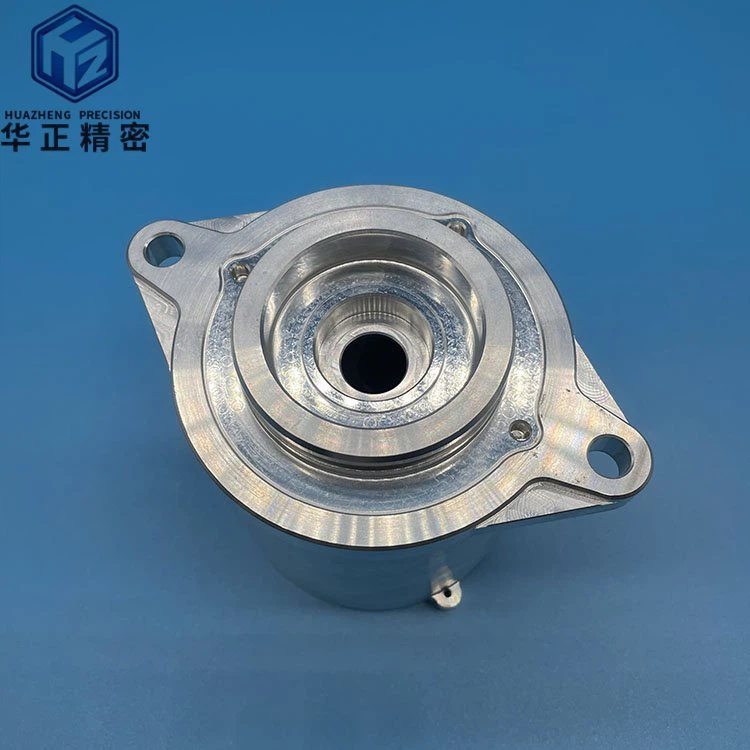
CNC machining is renowned for its high precision. Modern CNC machines can achieve extremely tight tolerances, often within a few micrometers. This makes CNC machining ideal for applications that require high - precision components, such as aerospace and medical devices. For instance, High Precision Aluminium CNC Machining Car Parts are produced with strict tolerances to ensure proper fit and function in automotive engines and transmissions.
3D - printing technology has made significant progress in terms of precision, but it still generally lags behind CNC machining when it comes to tight tolerances. The layer - by - layer nature of 3D printing can introduce some variations in dimensions, especially for complex geometries. While some high - end 3D printers can achieve relatively good precision, it may not be sufficient for applications with extremely strict tolerance requirements.
Surface Finish
CNC machining can produce parts with a smooth and high - quality surface finish. The cutting tools used in CNC machining can be selected and optimized to achieve the desired surface roughness. Post - machining processes such as polishing can further improve the surface finish.
3D - printed aluminium parts typically have a rougher surface finish due to the layer - by - layer deposition. Although post - processing techniques like sanding and polishing can be applied to improve the surface, it may be more time - consuming and costly compared to CNC machining.
Design Flexibility
Complex Geometries
3D printing offers unparalleled design flexibility when it comes to creating complex geometries. It can easily produce parts with internal cavities, lattice structures, and organic shapes that would be difficult or impossible to manufacture using CNC machining. This makes 3D printing a great choice for prototyping and creating custom - designed components.
CNC machining, while capable of producing complex parts, has some limitations. For example, it may be challenging to machine parts with deep internal cavities or very thin walls. However, for parts with more straightforward geometries, CNC machining can be a more efficient and cost - effective option.
Customization
Both CNC machining and 3D printing can be used for customized parts. But 3D printing allows for rapid customization without the need for expensive tooling changes. You can quickly modify the digital design and print a new part.
CNC machining also offers customization, but changing the design may require modifying the cutting tools and programming. This can be time - consuming and costly, especially for small - batch production.
Production Efficiency
Batch Size
For large - batch production, CNC machining is often more efficient. Once the CNC machine is set up and programmed, it can produce parts at a relatively high speed. The production time per part remains relatively constant, and the cost per part decreases as the batch size increases. You can learn more about the efficiency of Precision Aluminium CNC Milling Service for large - scale production.
3D printing is more suitable for small - batch production and prototyping. Since there is no need for tooling, it can quickly produce a small number of parts. However, the production speed of 3D printing is generally slower than CNC machining, and the cost per part may not decrease significantly with an increase in batch size.
Lead Time
CNC machining usually has a longer lead time for initial setup. The programming of the CNC machine and the preparation of the cutting tools can take some time. However, once the setup is complete, the production can proceed relatively quickly.
3D printing has a shorter lead time for prototyping. You can start printing a part soon after the digital design is ready. This makes it a great option for rapid prototyping and product development.
Cost Considerations
Material Cost
The material cost for both CNC machining and 3D printing is based on the type of aluminium used. However, CNC machining often results in more material waste because it starts with a solid block and removes excess material.
3D printing uses only the amount of material required to build the part, which can reduce material waste. But the cost of the aluminium powder used in 3D printing is generally higher than the cost of solid aluminium blocks used in CNC machining.
Tooling and Setup Cost
CNC machining requires the use of cutting tools and fixtures, which can be expensive, especially for complex parts. The setup time and cost for CNC machining can also be significant, especially for small - batch production.
3D printing eliminates the need for tooling, which can save a lot of cost, especially for prototyping and small - batch production. However, the initial investment in a 3D printer can be high.

Conclusion
In conclusion, both CNC aluminium parts and 3D - printed aluminium parts have their own advantages and disadvantages. The choice between the two depends on various factors such as the application requirements, design complexity, batch size, and cost constraints.
If you need high - precision parts with excellent mechanical properties and are producing large batches, CNC machining may be the better option. On the other hand, if you require complex geometries, rapid prototyping, or small - batch production, 3D printing could be more suitable.
As a supplier of CNC Aluminium Parts, I have the expertise and resources to provide high - quality CNC - machined aluminium components for your projects. Whether you are in the automotive, aerospace, or any other industry, I can work with you to meet your specific needs. If you are interested in learning more about our CNC aluminium parts or would like to discuss a potential project, please feel free to reach out for a procurement discussion.
References
- "Manufacturing Engineering & Technology" by Serope Kalpakjian and Steven R. Schmid
- "Additive Manufacturing Technologies" by Ian Gibson, David W. Rosen, and Brent Stucker


