


Temperature is a fundamental environmental factor that significantly influences the physical and mechanical properties of materials. As a supplier of brass and copper parts, understanding the effects of temperature changes on these materials is crucial for ensuring product quality, performance, and reliability. In this blog post, we will explore the various impacts of temperature variations on brass and copper parts, shedding light on the scientific principles behind these phenomena and their practical implications for our products.
Thermal Expansion
One of the most noticeable effects of temperature changes on brass and copper parts is thermal expansion. Like most metals, brass and copper expand when heated and contract when cooled. This behavior is governed by the coefficient of thermal expansion (CTE), which is a measure of how much a material expands or contracts per unit length per degree change in temperature.
Brass, an alloy primarily composed of copper and zinc, typically has a CTE ranging from 18 to 20 × 10⁻⁶ /°C, while copper has a slightly higher CTE of around 17 × 10⁻⁶ /°C. These values indicate that for every degree Celsius increase in temperature, a brass or copper part will expand by a small but measurable amount.
The consequences of thermal expansion can be significant, especially in applications where precise dimensions are critical. For example, in CNC Brass Machinery Part, even a slight change in dimensions due to temperature fluctuations can affect the fit and function of the part, leading to issues such as misalignment, increased wear, and reduced performance.
To mitigate the effects of thermal expansion, engineers often design parts with allowances for expansion and contraction. This may involve incorporating expansion joints, using materials with lower CTEs, or implementing temperature compensation mechanisms.
Mechanical Properties
Temperature changes can also have a profound impact on the mechanical properties of brass and copper parts. As the temperature increases, the strength and hardness of these materials generally decrease, while their ductility and toughness increase.
At elevated temperatures, the atomic structure of brass and copper becomes more mobile, allowing dislocations to move more easily through the material. This results in a decrease in the material's resistance to deformation, leading to a reduction in strength and hardness. Conversely, the increased mobility of atoms also makes the material more ductile, allowing it to deform more easily without fracturing.
The effect of temperature on the mechanical properties of brass and copper is particularly important in applications where the parts are subjected to high stresses or loads. For instance, in High precision CNC Machining Brass Parts for new energy automobile, the parts may experience significant temperature variations during operation, which can affect their performance and durability.
To ensure the reliability of brass and copper parts under varying temperature conditions, it is essential to select materials with appropriate mechanical properties and to design the parts to withstand the expected temperature range. This may involve conducting material testing at different temperatures to determine the optimal material and design parameters.
Electrical Conductivity
Brass and copper are well-known for their excellent electrical conductivity, which makes them widely used in electrical and electronic applications. However, temperature changes can also affect the electrical conductivity of these materials.
As the temperature increases, the electrical conductivity of brass and copper generally decreases. This is because the increased thermal energy causes the atoms in the material to vibrate more vigorously, which scatters the electrons and makes it more difficult for them to flow through the material.

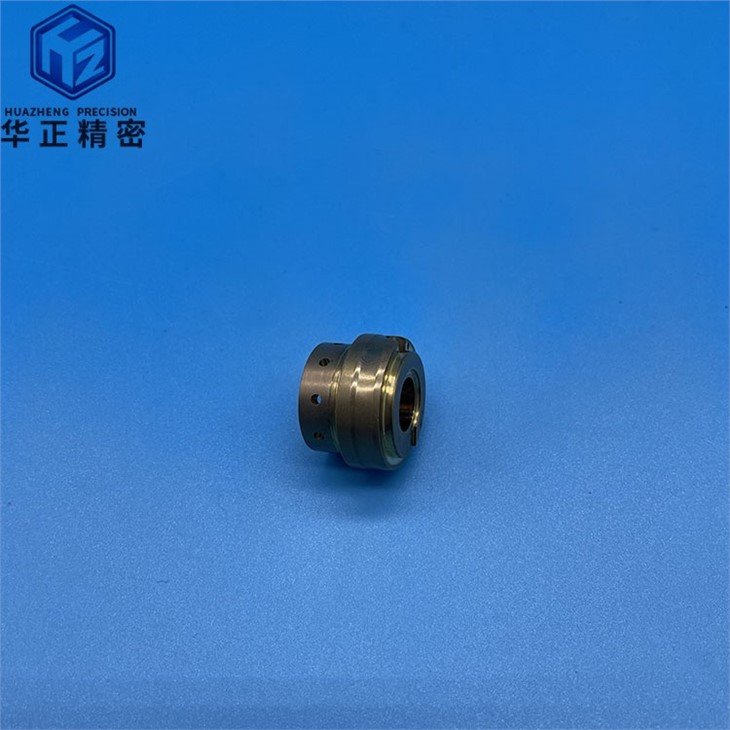
The decrease in electrical conductivity with increasing temperature can have significant implications for electrical and electronic devices. For example, in electrical wiring and connectors, a decrease in conductivity can lead to increased resistance, which in turn can cause power losses, heating, and potential safety hazards.
To minimize the impact of temperature on electrical conductivity, it is important to select materials with high electrical conductivity and to design the electrical systems to operate within a suitable temperature range. Additionally, proper thermal management techniques, such as heat sinks and cooling fans, can be used to dissipate heat and maintain the temperature of the parts within acceptable limits.
Corrosion Resistance
Another important aspect affected by temperature changes is the corrosion resistance of brass and copper parts. Corrosion is a chemical reaction that occurs when a metal is exposed to an environment containing oxygen, moisture, and other corrosive agents.
In general, the rate of corrosion increases with increasing temperature. This is because higher temperatures accelerate the chemical reactions involved in corrosion, making the metal more susceptible to damage.
However, the effect of temperature on corrosion resistance can vary depending on the specific environment and the composition of the brass or copper alloy. For example, some brass alloys containing elements such as aluminum or nickel may exhibit improved corrosion resistance at elevated temperatures.
In applications where corrosion resistance is critical, such as in Machined Copper Spare Part used in marine or chemical environments, it is important to select materials with appropriate corrosion resistance properties and to implement protective measures, such as coatings or surface treatments, to prevent corrosion.
Practical Implications for Our Products
As a supplier of brass and copper parts, we understand the importance of considering the effects of temperature changes in our product design and manufacturing processes. We work closely with our customers to ensure that our parts are designed to meet their specific requirements and to withstand the expected temperature conditions.
When selecting materials for our parts, we take into account the CTE, mechanical properties, electrical conductivity, and corrosion resistance of the materials at different temperatures. We also conduct extensive testing to verify the performance of our parts under various temperature conditions.
In addition, we offer a range of value-added services, such as heat treatment and surface finishing, to improve the performance and durability of our parts. These services can help to optimize the material properties and enhance the resistance of the parts to temperature-induced changes.
Conclusion
Temperature changes can have a significant impact on the physical and mechanical properties of brass and copper parts. From thermal expansion and changes in mechanical properties to effects on electrical conductivity and corrosion resistance, understanding these phenomena is essential for ensuring the quality and reliability of our products.
As a supplier of brass and copper parts, we are committed to providing our customers with high-quality products that are designed to perform under a wide range of temperature conditions. By leveraging our expertise in materials science and manufacturing processes, we can help our customers overcome the challenges posed by temperature variations and achieve their goals.
If you are in need of high-quality brass and copper parts, we invite you to contact us to discuss your specific requirements. Our team of experts will be happy to assist you in selecting the right materials and designing the optimal solutions for your applications.
References
- ASM Handbook Volume 2: Properties and Selection: Nonferrous Alloys and Special-Purpose Materials. ASM International.
- Callister, W. D., & Rethwisch, D. G. (2011). Materials Science and Engineering: An Introduction. Wiley.
- Davis, J. R. (Ed.). (2001). Copper and Copper Alloys. ASM International.


