


Hey there! As a supplier of 5-Axis CNC machining services, I've had my fair share of experience with both horizontal and vertical 5-Axis CNC machines. In this blog, I'm gonna break down the differences between these two types of machines, so you can make an informed decision when it comes to your machining needs.
Structure and Design
First off, let's talk about the structure and design. Vertical 5-Axis CNC machines have a spindle that's oriented vertically. This means the cutting tool moves up and down, kind of like a drill press. It's a setup that's pretty common in many machining shops. The workpiece is usually placed on a table below the spindle, and the machine can move the tool in multiple directions to create complex shapes.
On the other hand, horizontal 5-Axis CNC machines have a horizontally oriented spindle. The cutting tool moves side to side, and the workpiece is often held in a horizontal position. This design allows for better chip evacuation since gravity helps the chips fall away from the cutting area.
Accessibility and Workpiece Setup
When it comes to accessibility, vertical machines are great for certain types of work. They're easy to load and unload workpieces, especially if you're dealing with smaller parts. You can simply place the part on the table and secure it, and you're good to go. This makes them a popular choice for quick turnaround jobs and small batch production.
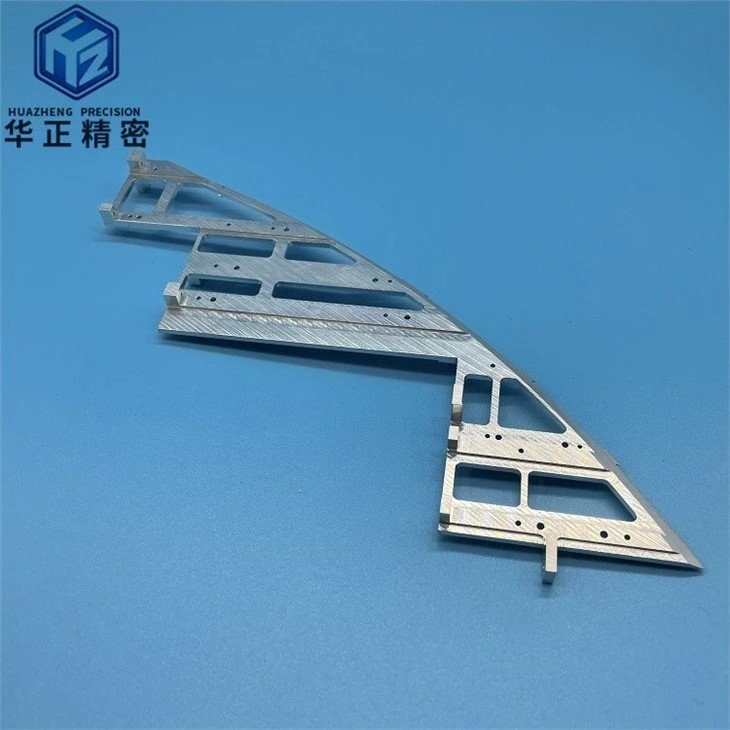

Horizontal machines, however, offer better accessibility for larger and more complex workpieces. Since the spindle is horizontal, you can access different sides of the part more easily without having to reposition it multiple times. This is a huge advantage when you're working on parts that require extensive machining on multiple surfaces. For example, if you're making a 5 Axis Machining Heat Sink, a horizontal machine can make the process more efficient.
Chip Evacuation
Chip evacuation is a crucial factor in CNC machining. In vertical machines, chips can sometimes accumulate around the cutting area, which can lead to poor surface finishes and even damage to the cutting tool. You might need to use additional methods like coolant or air blasts to clear the chips away.
Horizontal machines have a natural advantage here. Gravity pulls the chips down and away from the cutting area, so they're less likely to interfere with the machining process. This results in better surface finishes and longer tool life. If you're working on Sandblasting 6061 Aluminum 5 Axis Milling Parts, the improved chip evacuation of a horizontal machine can really make a difference.
Rigidity and Stability
Rigidity and stability are important for achieving accurate and precise machining. Vertical machines are generally more rigid in the Z-axis (the up-and-down movement). This makes them well-suited for operations that require a lot of force in that direction, like drilling deep holes.
Horizontal machines, on the other hand, are more stable in the X and Y axes (the side-to-side and front-to-back movements). This stability allows for more accurate machining of large, flat surfaces. If you're making 5 Axis Machining Parts that require high precision on large areas, a horizontal machine might be the better choice.
Cost and Space Requirements
Cost is always a consideration. Vertical 5-Axis CNC machines are usually more affordable upfront. They also take up less floor space, which is a big plus if you're working in a smaller shop. This makes them a great option for small businesses or those just starting out in 5-Axis machining.
Horizontal machines, however, tend to be more expensive. They require more space due to their larger size and the need for additional support equipment. But if you're looking for high productivity and better machining capabilities for large and complex parts, the investment might be worth it.
Applications
The choice between horizontal and vertical machines also depends on the specific applications. Vertical machines are often used for die and mold making, engraving, and small part production. They're versatile enough to handle a wide range of materials, from plastics to metals.
Horizontal machines are commonly used in the aerospace, automotive, and heavy machinery industries. They're ideal for machining large components like engine blocks, turbine blades, and structural parts.
Conclusion
So, there you have it - the main differences between horizontal and vertical 5-Axis CNC machines. Each type has its own advantages and disadvantages, and the right choice depends on your specific needs, budget, and the type of work you'll be doing.
If you're still not sure which machine is right for your project, or if you're looking for high-quality 5-Axis CNC machining services, don't hesitate to reach out. We're here to help you find the best solution for your machining needs and ensure that you get the best results possible.
References
- "CNC Machining Handbook"
- Industry reports on 5-Axis CNC machining technology


