


As a supplier of 5 Axis Machining Heat Sinks, understanding how to measure the thermal performance of these crucial components is of utmost importance. In this blog, we will delve into the methods and considerations for accurately assessing the thermal efficiency of 5 Axis Machining Heat Sinks.
The Significance of Thermal Performance in 5 Axis Machining Heat Sinks
In the realm of 5 Axis Machining, heat sinks play a vital role in maintaining the optimal operating temperature of various components. The high - speed and complex operations in 5 Axis Machining generate a significant amount of heat. If not properly dissipated, this heat can lead to thermal expansion, reduced precision, and even premature failure of the machining parts. A heat sink with excellent thermal performance can ensure the stability and longevity of the 5 Axis Machining process, which in turn enhances the quality of the High Precision 5 - Axis Spare Parts being produced.
Key Parameters for Measuring Thermal Performance
Thermal Resistance
Thermal resistance is one of the most fundamental parameters for evaluating the thermal performance of a heat sink. It represents the ability of the heat sink to resist the flow of heat. A lower thermal resistance indicates that the heat sink can transfer heat more efficiently from the heat source to the surrounding environment.
Mathematically, thermal resistance (R) is defined as the temperature difference (ΔT) between the heat source and the ambient divided by the heat transfer rate (Q):
[R=\frac{\Delta T}{Q}]
To measure the thermal resistance of a 5 Axis Machining Heat Sink, we can use a thermal test setup. First, a known heat source is attached to the heat sink. The heat source can be a power resistor that dissipates a specific amount of power. Temperature sensors are placed at the heat source and at a location in the ambient air. By measuring the temperature difference between the heat source and the ambient and knowing the power dissipated by the heat source, we can calculate the thermal resistance.
Heat Transfer Coefficient
The heat transfer coefficient (h) measures the rate of heat transfer between the heat sink surface and the surrounding fluid (usually air). It is influenced by factors such as the surface area of the heat sink, the flow rate of the cooling fluid, and the material properties of the heat sink.
The heat transfer rate (Q) can be expressed using Newton's law of cooling:
[Q = hA\Delta T]
where A is the surface area of the heat sink and ΔT is the temperature difference between the heat sink surface and the ambient fluid.
To determine the heat transfer coefficient, we can use a wind tunnel test. In a wind tunnel, a controlled flow of air is passed over the heat sink. By measuring the power input to the heat source, the temperature difference between the heat sink surface and the air, and the surface area of the heat sink, we can calculate the heat transfer coefficient.
Surface Area
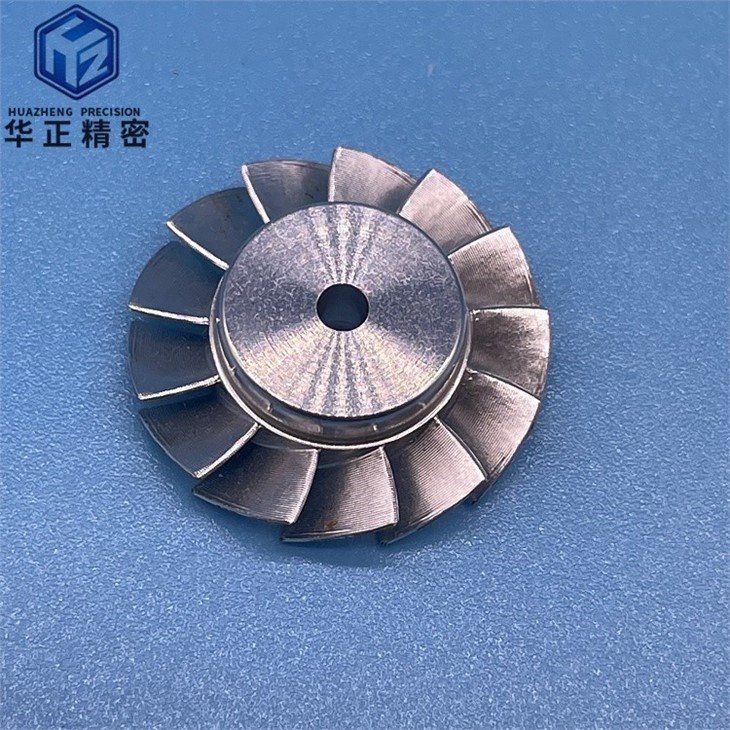
The surface area of a heat sink is a critical factor in its thermal performance. A larger surface area provides more area for heat transfer to occur. In 5 Axis Machining, heat sinks can be designed with complex geometries to increase their surface area. For example, fins are commonly used to enhance the surface area of a heat sink.
We can measure the surface area of a heat sink using 3D scanning technology. A 3D scanner can create a detailed digital model of the heat sink, and software can then calculate the total surface area based on the scanned data.
Testing Methods
Steady - State Testing
Steady - state testing is a common method for measuring the thermal performance of heat sinks. In this method, the heat sink is allowed to reach a steady - state condition, where the temperature of the heat sink and the surrounding environment no longer change with time.
To conduct a steady - state test, we set up a test rig with a heat source, the heat sink, and temperature sensors. The heat source is powered on, and the system is left to stabilize for a certain period. Once the steady - state is reached, we measure the temperature at different points and the power input to the heat source. This data is then used to calculate the thermal resistance and other thermal parameters.
Transient Testing
Transient testing is useful for understanding how a heat sink responds to sudden changes in heat load. In a transient test, the heat source is suddenly turned on or off, and the temperature of the heat sink is monitored as a function of time.
This type of testing can provide insights into the dynamic thermal behavior of the heat sink, such as its thermal response time. By analyzing the transient temperature data, we can optimize the design of the heat sink to better handle sudden changes in heat generation during 5 Axis Machining operations.
Factors Affecting Thermal Performance
Material Selection
The material of the heat sink has a significant impact on its thermal performance. Common materials for heat sinks include aluminum and copper. Aluminum is lightweight and has good thermal conductivity, making it a popular choice for many applications. Copper, on the other hand, has a higher thermal conductivity than aluminum but is heavier and more expensive.
When selecting a material for a 5 Axis Machining Heat Sink, we need to consider not only the thermal conductivity but also other factors such as cost, weight, and machinability.
Design and Geometry
The design and geometry of the heat sink can greatly affect its thermal performance. As mentioned earlier, fins can increase the surface area of the heat sink. The shape, size, and spacing of the fins all play a role in determining the heat transfer efficiency.
In 5 Axis Machining, we can create heat sinks with complex geometries that are optimized for specific applications. For example, heat sinks can be designed with variable fin heights and thicknesses to enhance the heat transfer in different regions of the heat sink.
Cooling Fluid Flow
The flow of the cooling fluid (usually air) over the heat sink is crucial for its thermal performance. A higher flow rate of air can increase the heat transfer coefficient and reduce the thermal resistance.
In 5 Axis Machining environments, proper ventilation and the use of fans can be employed to ensure adequate air flow over the heat sinks. We can also use computational fluid dynamics (CFD) simulations to optimize the air flow around the heat sink and improve its thermal performance.
Importance for 5 Axis Machining Parts
The accurate measurement of the thermal performance of 5 Axis Machining Heat Sinks is directly related to the quality of 5 Axis Machining Parts and 5 Axis Machining Spare Parts. By ensuring that the heat sinks can effectively dissipate heat, we can minimize thermal - induced errors in the machining process. This leads to higher precision and better surface finish of the machined parts, which is essential for applications that require high - quality components.
Conclusion
Measuring the thermal performance of 5 Axis Machining Heat Sinks is a multi - faceted process that involves understanding and measuring key parameters such as thermal resistance, heat transfer coefficient, and surface area. By using appropriate testing methods and considering factors such as material selection, design, and cooling fluid flow, we can accurately assess the thermal efficiency of heat sinks.
As a supplier of 5 Axis Machining Heat Sinks, we are committed to providing high - quality products with excellent thermal performance. If you are interested in our heat sinks or have any questions regarding their thermal performance, please feel free to contact us for procurement and further discussions.

References
- Incropera, F. P., & DeWitt, D. P. (2002). Fundamentals of Heat and Mass Transfer. Wiley.
- Kraus, A. D., Azar, J. O., & Bar - Cohen, A. (2001). Thermal Design and Analysis of Electronic Equipment. Wiley.


