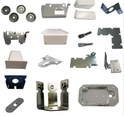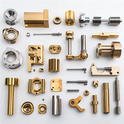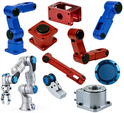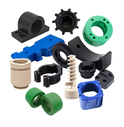

CNC Machined Parts Surface Finishing: Powder Coating vs. Liquid Painting – Differences, Pros, Cons & Selection Guide
Surface finishing is a critical step in CNC machined parts production, directly affecting durability, appearance, and service life. Powder coating (electrostatic powder spraying) and liquid painting (spray painting) are the two most common processes. This article compares them across five dimensions – process principles, coating performance, environmental impact, flexibility, and cost – to help buyers and manufacturers make the right choice for their precision machined components.
Process Principles
Powder coating: Uses electrostatic spray technology to apply dry powder onto the part surface, then cures it under high heat. This solvent-free, dry process is environmentally friendly.
Liquid painting: Atomizes liquid paint through a spray gun, relying on solvent evaporation for air drying or low-temperature curing. It offers flexible application but involves chemical solvents.
2. Coating Performance
Powder coating advantages: Uniform thickness, strong adhesion, high hardness, excellent wear and corrosion resistance. Withstands outdoor oxidation, acid, and alkali exposure. No sagging, pinholes, or peeling.
Liquid painting disadvantages: Poor thickness control, prone to sagging, orange peel, and bubbles. Lower hardness, weaker weather and scratch resistance – tends to fade or peel over time. Suitable only for basic protection.
3. Environmental Impact & Efficiency
Powder coating: Powder overspray can be recycled with >95% utilization. Zero VOC emissions. Ideal for high-volume batch processing.
Liquid painting: Generates significant VOC fumes, paint mist, and wastewater – high environmental treatment costs. Slow drying and curing, heavily affected by temperature and humidity. Much lower efficiency for mass production.
4. Flexibility & Suitable Applications
Liquid painting advantages: Thin coating, precise color matching, supports special effects (gradient, matte, gloss, transparent). Ideal for precision thin-wall, small complex-shaped, and high-accuracy CNC machined parts – does not affect assembly dimensions.
Powder coating limitations: Relatively thick coating, unable to achieve ultra-thin finishes. Color fine-tuning is difficult. Best suited for large structural parts, outdoor machinery accessories, and metal enclosures where dimensional precision is less critical but high protection is required.
5. Cost & Selection Advice
Batch production: Powder coating is more cost-effective (high powder utilization, lower labor costs, low rework rates).
Small-batch / custom colors / special appearance needs: Liquid painting offers better cost advantages (flexible process, no minimum order quantity).
Summary Selection Guide
| If you need... | Recommended finishing |
| High protection, cost-effective, eco-friendly batch production | Powder Coating |
| Precision dimensions, diverse appearance, small-batch custom parts | Liquid Painting |
Choosing the right surface finishing for CNC machined parts improves part quality while effectively controlling production costs.